

“There’s a lot more behind it that he cannot say because he could lose his job”
That statement, written by Clinton Building Inspector Chuck Bailey’s wife during the controversy surrounding the March closure of Lankford’s 109, does not establish misconduct in and of itself but raises one of the central questions surrounding the City’s decision to shut down the restaurant: What was happening behind the scenes?
Records obtained by Henry County MO Watchdog raise even more questions about why Lankford’s 109 was ordered closed this past March and who made that decision.
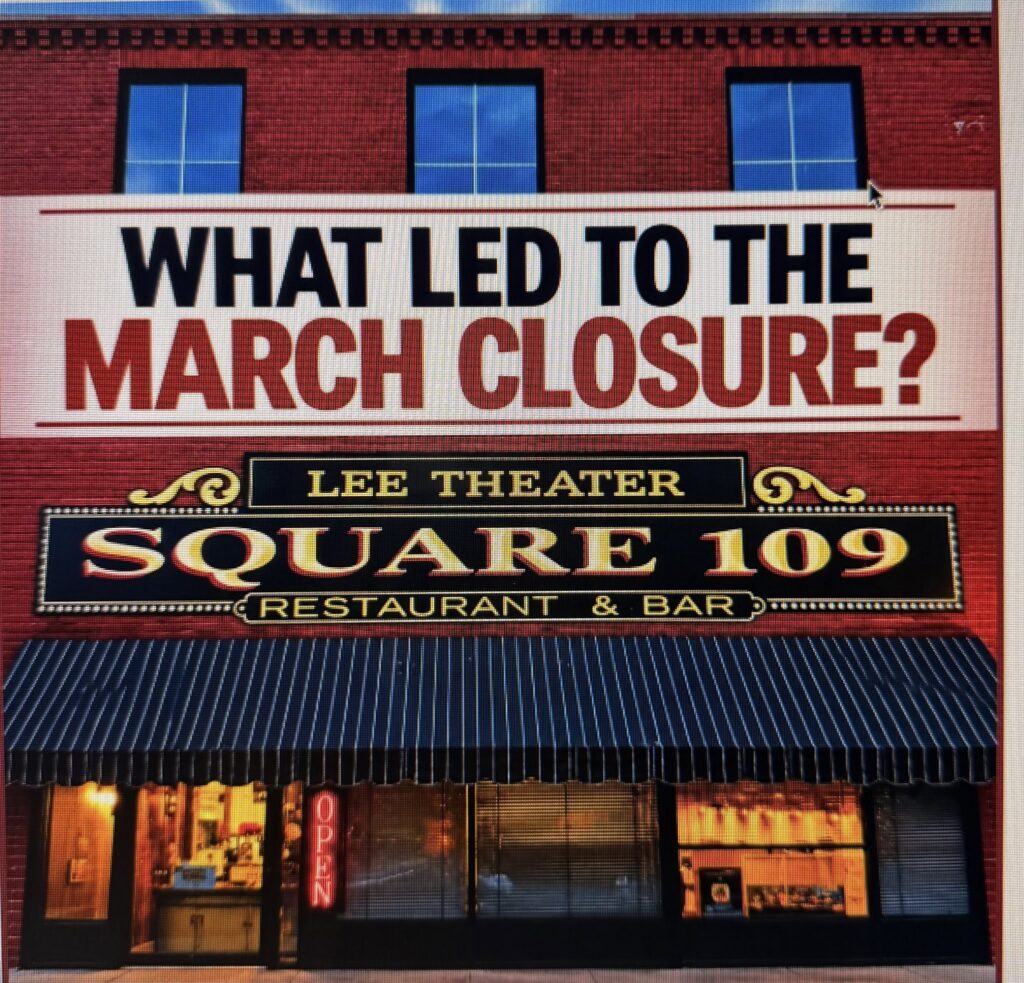
HENRY COUNTY, Mo. —The restaurant at 109 S. Washington was not new to downtown Clinton.
For years, the location operated as Square 109 under previous owner Mike Etters, making it an established restaurant in the community well before the events described in this story.
What was new was the ownership.
At the beginning of January 2026, Troy and Dena Ryan took over the restaurant and renamed it Lankford’s 109. With that change came the financial responsibility of taking over an existing restaurant—employees, food, equipment, utilities, operating expenses and the investment required to make the business their own.
That distinction is important.
This was not a restaurant that suddenly appeared in January. The restaurant had operated at 109 S. Washington for years. But Troy and Dena Ryan were only weeks into their ownership when the City of Clinton ordered the building closed on March 13, 2026.
For the Ryans, the timing could hardly have been worse. They had only recently assumed the financial obligations of the business when their ability to generate revenue from it was abruptly stopped.
The owners say the shutdown ultimately cost them tens of thousands of dollars.
But after reviewing records obtained from the City of Clinton, the Henry County Missouri Watchdog has found a sequence of events that raises serious questions about how that decision was made.
There was a legitimate structural problem with the building. That is not in dispute.
In fact, the structural concern predated the Ryans’ ownership of the restaurant.
What is less clear is why the entire restaurant suddenly had to be closed on March 13.
In late December, while the restaurant was still under its previous ownership, professional structural engineer Joseph Towns wrote that because the repair area was limited, his firm was comfortable with the restaurant remaining open during repairs if work began soon.
Approximately two and a half months later, after Troy and Dena Ryan had taken over the business—the City took a different position and ordered the entire restaurant closed.
That raises the question: What changed? Had the City received new engineering information indicating that the building’s condition had deteriorated or that it posed an immediate safety risk?
THE ENGINEER SAID REPAIRS WERE URGENT — BUT THE RESTAURANT COULD REMAIN OPEN
The structural issue began before the current owners took possession.
Following a December 2025 Fire Department inspection, concerns were raised about deterioration and a partial collapse involving masonry near the rear of the building.
Structural engineer Joseph Towns of LORAC Design Group inspected the property and issued a December 31 letter agreeing that repairs required immediate attention.
But there is an important distinction.
While Towns considered the repairs urgent, his letter did not call for the entire restaurant to close.
Instead, Towns wrote that because the repair area was limited, his firm was comfortable with the restaurant remaining open during the repair process if work began soon.
That distinction would become important more than two months later.
THE MARCH 12 EMAIL
At 11:05 a.m. on March 12, Barry Glasscock emailed City Administrator Christy Maggi about 109 S. Washington.
Glasscock was not a City employee, elected official or official responsible for dangerous-building enforcement. He did, however, serve on the City’s Historic Preservation Commission, a role separate from dangerous-building enforcement.
His email nevertheless reveals that he had discussed Troy and Dena Ryan’s building with the City’s Building Inspector on multiple occasions concerning the south wall and the City’s handling of the issue.
Glasscock wrote that he had been “visiting with Chuck in early January,” referring to the City’s Building Inspector Chuck Bailey.
Glasscock said Bailey had shared the engineer’s letter with him.
Glasscock’s March 12 email went further.
Glasscock wrote to City Administrator Christy Maggi:
“Please take immediate action on this and let me know the plan within a week.”
The wording is noteworthy because Glasscock was not the building owner or a City official responsible for building enforcement.
And what happened over the next several hours makes the timing significant.
WITHIN HOURS, CITY HALL BEGAN MOVING
Glasscock’s email arrived at 11:05 a.m. on March 12.
At 2:56 p.m., City Administrator Maggi emailed Bailey:
“What’s the status of the repairs to Square 109?”
Then, at 3:24 p.m., Maggi emailed Bailey again.
She said she had located the earlier LORAC engineering letter and wrote that it:
“supports our position that the owner of 109 S. Washington has had adequate time to complete the repairs.”
That wording raises another unanswered question.
Whose “position” was Maggi referring to, and when had that position been established?
The records reviewed by the Watchdog do not appear to contain the earlier discussion establishing that position.
Maggi continued:
“I believe that the City has reason to give notice that no one will be allowed in the building until the repairs are completed or until an updated engineer’s report is produced that states the building poses no threat.”
She also raised concerns about the buildings immediately beside Lankford’s:
“The risk to the buildings directly adjacent to the north and to the south should be assessed, also.”
That creates another question.
If the condition potentially threatened neighboring structures, what assessment was performed on those properties? Records reviewed by the Watchdog do not indicate that the neighboring buildings were similarly ordered vacated.
THE OWNER IS GIVEN UNTIL MONDAY
At 4:10 p.m. March 12, Bailey emailed Troy Ryan, the new owner of Lankford’s 109.
Bailey told Ryan:
“I must see significant progress by noon on Monday, March 16, 2026 or the city will be forced to declare the structure a ‘Dangerous Building’ under ordinance #3144.”
That appears to establish a deadline.
Ryan had until noon Monday to demonstrate significant progress.
But Monday never came.
The following day, the City changed course.
FRIDAY: THE RESTAURANT IS CLOSED
On March 13, the City’s Building Inspector Bailey issued a revised notice declaring 109 S. Washington a Dangerous Building.
The letter said:
“The city’s attorney was consulted late yesterday regarding this situation. As a result, I am issuing a revised notice.”
Bailey ordered that beginning at the close of business March 13, the building could no longer be occupied by employees or customers until a licensed structural engineer found it safe.
Among the records provided to and reviewed by the Watchdog as of publication, we identified no documentation of a new engineering inspection, newly discovered structural deterioration, or comparable physical event between the earlier assessment and the March 13 closure.
But the timeline becomes even more difficult to explain when looking at what happened during the final 24 hours.
On March 12, Bailey had given the owners until March 16 to address the City’s concerns.
By March 13, that deadline was gone and the restaurant was ordered closed thus creating another question:
Why was the March 16 deadline abandoned?
GLASSCOCK GETS THE NEWS
At approximately 3:00 p.m. on March 13, Maggi responded to Glasscock.
She informed him that the building had been declared dangerous and that the owners had been ordered to vacate until repairs were completed and/or the building was deemed safe by an engineer.
The timing creates a sequence worth examining:
Glasscock asked the City to take “immediate action” on March 12.
Within hours, City officials were discussing whether occupancy should continue.
City Building Inspector Chuck Bailey initially gave the owner until March 16 to demonstrate significant progress.
The following day, that deadline was replaced by an order requiring the restaurant to close.
Glasscock was then informed that the action had been taken.
The chronology alone does not establish that Glasscock’s email caused the closure. But it does leave an important question: What role, if any, did his communication with City officials play in the actions that followed?
It also raises another question that cannot be answered by the emails alone: What did Glasscock himself mean when he asked the City to take “immediate action”?
To better understand his involvement and intent, the Watchdog spoke directly with Glasscock about why he contacted the City, what he expected officials to do, and his reaction when he learned Lankford’s 109 had been ordered closed.
GLASSCOCK EXPLAINS HIS INTENT
In a subsequent interview with the Watchdog, Glasscock did not dispute that he wanted his March 12 email to prompt action by the City. He said his concern was that months had passed since he became aware of the structural issue and he wanted City officials to follow up.
“By immediate action I meant, go in and take a look and let’s see what needs to be done or what’s being done,” Glasscock said.
He said he expected the City to inspect the property, determine what progress had been made and, if necessary, have an engineer evaluate the situation.
“I did not want them to close the restaurant,” Glasscock said.
“I thought that was stupid.”
“All I wanted to do is, I wanted to get the wheels turning,” Glasscock said. “But their choice of what they decided to do, I did not agree with.”
THE CITY’S OWN RECORDS COMPLICATE THE STORY
What happened next makes the decision to keep Lankford’s 109 closed even more deserving of scrutiny.
On March 16, just three days after the City ordered the restaurant closed, structural engineer Joseph Towns contacted the City after learning that the new owners were taking action to address the conditions identified during his earlier inspection.
Towns was not unfamiliar with the building. He was the structural engineer whose December 31 letter the City had previously cited when discussing the need for immediate repairs.
But Towns had never said that “immediate action” meant the restaurant had to close. In that December letter, he specifically stated that his firm was comfortable with the restaurant remaining open while repairs were being made, provided the work began soon.
Now, on March 16, Towns again addressed the issue of occupancy.
After learning that the new owners had removed trash and debris, addressed Fire Department concerns and were moving forward with repairs, Towns asked the City:
“Would it be possible to hold off on closing the building and grant another 30 days for repairs?”
Towns explained that the new owner appeared more responsive and was addressing the issues identified in the previous inspection.
He also specifically recognized the financial consequences of keeping the restaurant closed, writing that his proposed approach would allow the building to be safely secured “while also providing the new owners with income during the process.”
For the owners of a newly opened restaurant, that income mattered.
Every day the doors remained locked meant another day without customers and another day without revenue—while payroll obligations, utilities, insurance and other expenses continued.
Yet the restaurant remained closed.
Rather than reopening Lankford’s 109 based upon the opinion of the structural engineer already involved with the building, City officials sought a second engineering opinion.
In communications seeking the second opinion, Bailey wrote that City officials were having difficulty relying on Towns’ opinion because Towns had previously emphasized the urgency of making repairs.
But those two positions were not necessarily contradictory.
A building can require urgent repairs without requiring the entire building to be vacated while those repairs are performed.
In fact, that appears to have been Towns’ position from the beginning: repair the problem promptly but allow the restaurant to continue operating under appropriate conditions while the work was completed.
That raises another important question:
Once Towns had again expressed support for continued occupancy while repairs proceeded, was it necessary to keep the entire restaurant closed while the City pursued a second opinion?
That question matters because obtaining another engineering opinion took time—and for Lankford’s 109, time meant money.
THE CITY SEEKS ITS OWN ENGINEER — AFTER THE CLOSURE
The City subsequently retained Allstate Consultants to conduct its own structural evaluation.
The professional-services agreement between the City and Allstate for inspecting the building is dated March 18, five days after the closure.
Allstate eventually conducted a site visit on March 24.
Allstate recommended restricting access to approximately the rear 17 feet 6 inches of the building while requiring professional engineering evaluation, repair plans, monitoring and other safeguards.
The City subsequently incorporated that approach into its requirements.
Bailey’s March 26 letter specifically contemplated “Ongoing Monitoring During Occupancy” and required the rear 17 feet 6 inches to be physically blocked from employees and customers.
The March 30 requirements again allowed for occupancy while repairs proceeded, while restricting access to the rear of the building: a part of the building not occupied by customers or used by staff during normal restaurant operations.
That doesn’t prove the March 13 closure was improper.
But it does make the original decision worthy of an explanation.
Why wasn’t a restricted-occupancy approach considered before the entire business was ordered closed?
THIS WASN’T JUST A BUILDING. IT WAS SOMEONE’S LIVELIHOOD.
By the time the City ordered Lankford’s 109 closed, the restaurant itself had been part of downtown Clinton for years.
But for Troy and Dena Ryan, their ownership of it was only weeks old.
They had taken over an established restaurant at the beginning of January, renamed it Lankford’s 109 and assumed the financial responsibilities that came with operating it.
Then, on March 13, the doors were ordered closed.
That timing matters.
The Ryans were not longtime owners who had years to recover their original investment or build financial reserves from the business. They had only recently taken on the financial responsibility of the restaurant when the City’s order eliminated their ability to generate revenue from it.
The owners say the interruption ultimately cost them tens of thousands of dollars.
Those are losses a government document cannot adequately describe.
Food had already been purchased. Employees expected paychecks. Insurance remained due. Utilities continued. Loans didn’t stop. And customers who arrived at a locked door had to find somewhere else to spend their money.
For any locally owned restaurant, an extended shutdown can be financially damaging.
For owners who had taken over the business only weeks earlier, while carrying the expenses and financial obligations associated with that transition, the consequences could be particularly severe.
THE QUESTION IS BIGGER THAN LANKFORD’S 109
This story is ultimately about more than one restaurant.
Local government has an obligation to protect the public when buildings are dangerous.
But that authority carries tremendous power.
A government official can sign a piece of paper and, within hours, stop a business from operating.
That makes consistency, documentation and transparency especially important.
The records also raise a transparency question about what information was shared with Glasscock, under what circumstances it was shared, and whether providing that information was consistent with the City’s ordinary practices.
The City’s own website identifies Christy Maggi as City Administrator and Chuck Bailey as Building Inspector, confirming the governmental positions reflected throughout the records.
Glasscock did not hold either of those governmental positions.
So, the relevant question isn’t whether Glasscock was entitled to raise concerns. Any citizen has the right to bring a safety concern to City Hall.
The question is what role, if any, his communications played in the City’s decision-making process.
The timing of those communications, the information being shared with Glasscock, and the City’s actions that followed make that a reasonable question to ask.
OWNERS TAKE THEIR CASE TO CITY HALL
By March 30, the consequences of the shutdown were no longer theoretical.
Troy and Dena Ryan, who had taken ownership of the longstanding restaurant location only a couple months earlier, appeared before Clinton’s Public Works Committee accompanied by more than a dozen employees and supporters.
They described the financial hardship caused by keeping Lankford’s 109 closed and questioned why the business had been shut down in the first place.
Council Member Roger House told those assembled that the City would allow Lankford’s 109 to reopen the following day, with stipulations to be worked out over the following days.
For the owners and employees, it was welcome news.
But it didn’t answer the question that had followed the shutdown from the beginning:
What changed that caused the City to close the restaurant on March 13?
Michael Rosiere, who attended the meeting, asked House and City’s Building Inspector Chuck Bailey what new information the City had received between the December engineering assessment—which had allowed for continued occupancy while repairs proceeded—and the March 13 decision to shut the restaurant down.
According to Rosiere’s account of the meeting, House initially responded that the meeting was over.
Rosiere continued pressing the question, asking what would prevent another business from being subjected to a similarly abrupt closure in the future.
House responded that the City would look into measures to prevent such a situation in the future.
AFTER THE PUBLIC WORKS MEETING, ANOTHER MESSAGE RAISED A DIFFERENT QUESTION
Then came an unexpected communication.
On April 2, 2026, City Building Inspector Chuck Bailey’s wife sent a direct message to Michael Rosiere after seeing public criticism suggesting Bailey had singled out the restaurant.
Her message stated, in part:
“He was just following the instructions of his boss…”
She also wrote:
“There’s a lot more behind it that he cannot say because he could lose his job.”
A STATEMENT THAT RAISES MORE QUESTIONS
That statement raises a concern that goes beyond who physically signed the closure notice.
If there was, as Bailey’s wife stated, “a lot more behind it” that Bailey could not discuss because, according to his wife, doing so could cost him his job, what exactly was she referring to?
A City decision that shut down a private business and affected the livelihoods of its owners and employees should be supported by a clear and documented governmental process. If additional facts justified the closure, those facts should help explain the City’s decision.
The public has a legitimate interest in understanding whether Bailey was acting under instructions from another official and, if so, who gave those instructions and upon what information they were based.
The statement becomes even more noteworthy when viewed alongside text-message communications between Bailey and Ryan obtained by the Watchdog.
In the exchange, Ryan challenged the City’s explanation for the closure, writing:
“If it was fear driven, you would’ve evacuated the buildings on both sides. Try again.”
Bailey responded:
“It ain’t me. I’m just the guy who signs the paper.”
Bailey then wrote:
“Just got off the phone with the engineer. I’m trying like heck to get you back open. I will get back with you shortly.”
In a message sent from Bailey’s wife to Rosiere on April 2, she stated:
“He was just following the instructions of his boss.”
Those messages do not establish who ultimately made the decision to close Lankford’s 109. They do, however, provide additional context for Bailey’s role and for the questions raised by the later message from his wife.
Bailey’s wife was not speaking on behalf of the City, and her statement reflects her own account of circumstances involving her husband.
But they raise an unavoidable question:
What, if anything, was happening behind the scenes that Bailey’s wife believed he could not discuss without risking his job?
If the decision was based solely upon documented structural and public-safety concerns, the City should be able to explain the factual basis for that decision.
And if Bailey was carrying out instructions—as his wife’s message expressly stated and his own text could be interpreted to suggest—then identifying who gave those instructions, why they were given, and what evidence supported them becomes central to understanding what happened to Lankford’s 109.
For the owners who watched their newly opened restaurant remain closed while bills accumulated and employees went without work, that isn’t simply a question about internal City politics.
It is a question of accountability.
THE WATCHDOG WANTS THE MISSING ANSWER
The Watchdog is seeking additional records concerning communications between Glasscock, Bailey, Maggi, Mayor Carla Moberly, and City Council members.
The Watchdog has also sent another request asking in more detail whether any other document existed that would show evidence that led the City to believe conditions for that building had worsened since the December engineering inspection, when Towns stated that his firm was comfortable with the restaurant remaining open during the repair process if work began soon.
Those records could change the picture.
If they show City officials had additional evidence requiring immediate closure on March 13, we will report that.
If they show Glasscock’s communications played no meaningful role in the decision, we will report that.
But the records presently available leave an important question unanswered:
What new information, if any, did the City receive before its March 13 decision to close Lankford’s 109?
Until that question is answered, this deserves public scrutiny.
Because when government exercises the power to close someone’s livelihood, particularly a newly opened small business, the public should not have to guess why.
The records should show us.
THE QUESTION THAT REMAINS: COULD THIS HAPPEN AGAIN?
Beyond the circumstances surrounding Lankford’s 109, the events of March raise a broader question for Clinton businesses and City government:
What safeguards are in place to ensure that an abrupt business closure is supported by contemporaneous documented evidence and a clearly recorded decision-making process?
Public safety is a legitimate responsibility of local government. But when exercising the authority to close a business—an action that can immediately affect employees, owners and livelihoods—the process used to reach that decision is also worthy of public scrutiny.
That question was raised directly during the March 30 Public Works Committee meeting.
Michael Rosiere asked City Council Member Roger House what could be done to ensure another business did not experience a similar abrupt closure. House responded that the City would look into measures to prevent that from happening again.
That raises the final question:
What, if anything, has changed since March?
Has the City established additional procedures requiring an inspection, updated engineering evaluation, documented change in conditions or another defined level of review before a business is ordered closed under similar circumstances?
If changes have been made, the public deserves to know what they are.
If they have not, the question raised at that March meeting remains unanswered:
What will ensure that another Clinton business does not find itself in the same position?
By Michael Rosiere
Henry County Missouri Watchdog
September 23, 2026
When Local News Falls Short, The Watchdog Steps In.
Henry County Missouri Watchdog reached out to the City officials named in this report, along with Barry Glasscock, and provided each of them an opportunity to respond before publication. At the time of publication, Glasscock had responded; however, the Watchdog had not received responses from Mayor Carla Moberly, City Administrator Christy Maggi, Building Inspector Chuck Bailey, or City Council Member Roger House. Any responses received after publication will be considered for an update.